Best savings account rates are crucial for maximizing your savings. Whether you’re a seasoned saver or just starting, understanding how to get the most out of your money is essential. Let’s delve into the world of savings accounts and discover how you can make your money work harder for you.
Types of Savings Accounts
When it comes to saving money, there are different types of savings accounts you can choose from based on your financial goals and needs. Let’s explore the various options available to help you make an informed decision.




High-Yield Savings Accounts vs. Regular Savings Accounts
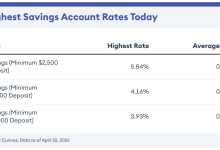
High-yield savings accounts typically offer higher interest rates compared to regular savings accounts. This means that your money can grow faster over time with a high-yield account. On the other hand, regular savings accounts may have lower interest rates but often have fewer requirements or restrictions. Consider your savings goals and how much access you need to your funds when deciding between the two.
Money Market Account for Higher Interest Rates
A money market account is another option for savers looking to earn higher interest rates on their funds. These accounts often offer competitive rates while still providing easy access to your money. Money market accounts may have higher minimum balance requirements compared to regular savings accounts, but they can be a good choice for those looking to maximize their savings potential.
Factors Affecting Savings Account Rates
When it comes to savings account rates, several key factors influence the interest rates offered by financial institutions. Economic conditions and the decisions made by the Federal Reserve play a significant role in determining these rates.
Economic Conditions Impact
Economic conditions such as inflation, unemployment rates, and overall market stability can impact savings account rates. In times of economic growth and stability, interest rates are likely to be higher as financial institutions aim to attract more deposits. Conversely, during periods of economic downturn or recession, interest rates may decrease to stimulate spending and investment, resulting in lower savings account rates.
Federal Reserve’s Decisions
The Federal Reserve, as the central bank of the United States, plays a crucial role in setting monetary policy and interest rates. The decisions made by the Federal Reserve, particularly regarding the federal funds rate, have a direct impact on savings account rates. When the Federal Reserve raises the federal funds rate, savings account rates are likely to increase as well. Conversely, a decrease in the federal funds rate can lead to lower savings account rates as financial institutions adjust their interest rates in response to the Fed’s actions.
Understanding APY vs. APR
When comparing savings accounts, it’s essential to understand the difference between APY (Annual Percentage Yield) and APR (Annual Percentage Rate). While both are interest rates, they are calculated differently and serve distinct purposes in financial transactions.
APR represents the annualized cost of borrowing or the return on an investment without accounting for compounding. On the other hand, APY factors in the effect of compounding interest, providing a more accurate reflection of the actual return on your savings over a year.
APY Calculations for Savings Accounts
To illustrate how APY calculations work for savings accounts, consider a hypothetical scenario where you deposit $1,000 into a savings account with a 2% APY. If the interest is compounded annually, after one year, you would earn $20 in interest ($1,000 x 0.02).
However, if the interest is compounded quarterly, the calculation becomes more complex. Using the formula for compound interest, the new balance after one year would be $1,000 * (1 + 0.02/4)^4, resulting in a slightly higher amount due to the more frequent compounding.
Effect of Compounding Frequency
The frequency of compounding plays a significant role in determining the overall interest earned in a savings account. The more frequently interest is compounded, the higher the effective APY will be. This means that choosing a savings account with a higher compounding frequency can lead to greater returns on your savings over time.
In conclusion, understanding the difference between APY and APR, along with the impact of compounding frequency, is crucial in selecting the best savings account to maximize your earnings.
Importance of Interest Rates
When it comes to choosing a savings account, considering interest rates is crucial for maximizing your earnings and achieving your long-term financial goals. The interest rate determines how much your money will grow over time, making it an essential factor to consider when deciding where to deposit your savings.
Strategies for Maximizing Interest Earnings
- Compare rates: Research and compare interest rates offered by different banks or financial institutions to find the highest possible rate for your savings.
- Consider online banks: Online banks often offer higher interest rates compared to traditional brick-and-mortar banks, allowing you to earn more on your savings deposits.
- Opt for high-yield savings accounts: High-yield savings accounts typically offer higher interest rates than standard savings accounts, helping you maximize your earnings over time.
- Regularly review and adjust: Keep track of interest rates and be willing to switch to a different savings account if you find a better rate elsewhere.
Impact of Fluctuating Interest Rates on Long-Term Goals
Fluctuating interest rates can have a significant impact on your long-term savings goals. When interest rates are low, your savings may not grow as quickly, potentially delaying your financial milestones. On the other hand, rising interest rates can boost your earnings and help you reach your goals faster. It’s important to stay informed about interest rate trends and adjust your savings strategy accordingly to ensure you are making the most of your money.
Comparing Online vs. Traditional Banks
When it comes to choosing where to open a savings account, one key decision is whether to go with an online bank or a traditional brick-and-mortar bank. Each option has its own set of advantages and drawbacks that can impact the interest rates offered on your savings.
Interest Rate Comparison
- Online banks typically offer higher interest rates on savings accounts compared to traditional banks. This is because online banks have lower overhead costs since they don’t have physical branches to maintain. As a result, they can pass on these savings to customers in the form of higher interest rates.
- Traditional brick-and-mortar banks, on the other hand, may offer lower interest rates on savings accounts due to their higher operating expenses associated with maintaining physical branches and staff.
Convenience and Drawbacks
- Managing a savings account with an online bank offers convenience in terms of 24/7 access to your accounts, the ability to transfer funds easily, and often more advanced online banking tools. However, some drawbacks include potential limitations on cash deposits and the lack of in-person customer service.
- Traditional banks provide the benefit of in-person customer service, which can be reassuring for some customers. However, they may have more limited online banking capabilities and may not offer the same level of flexibility that online banks do.
Security Measures and Impact on Interest Rates
- Online banks have robust security measures in place to protect customers’ sensitive information and funds. These measures often include encryption, multi-factor authentication, and regular monitoring for suspicious activity. The confidence in the security of online banking can positively impact interest rates by attracting more customers.
- Traditional banks also have security measures in place, but they may face different risks such as physical security issues at branch locations. The perceived security of traditional banks can influence interest rates as well, with customers valuing the trust and reliability associated with these institutions.
Minimum Balance Requirements
When it comes to savings accounts, minimum balance requirements play a crucial role in determining the interest rates offered by financial institutions. These requirements specify the minimum amount of money that must be maintained in the account to qualify for a particular interest rate.
Impact on Interest Rates
Maintaining a higher minimum balance in a savings account often results in higher interest rates. Financial institutions use this requirement as a way to encourage customers to keep more money in their accounts, allowing them to offer better interest rates as an incentive.
- Example 1: Online Savings Accounts – Online banks typically offer savings accounts with low or no minimum balance requirements. These accounts may provide competitive interest rates without the need to maintain a high balance.
- Example 2: High-Yield Savings Accounts – Some high-yield savings accounts have higher minimum balance requirements but offer significantly better interest rates compared to traditional savings accounts.
Penalties for Falling Below Minimum Balance
Failing to meet the minimum balance requirement in a savings account can lead to penalties or fees imposed by the financial institution. These penalties can vary depending on the bank and the type of account but often result in a reduction of interest earned or a fixed fee charged to the account holder.
It is essential for account holders to be aware of the minimum balance requirements of their savings accounts to avoid incurring unnecessary fees or penalties.
Introductory vs. Standard Rates
When considering a savings account, it is important to understand the difference between introductory rates and standard rates. Introductory rates are promotional rates offered by banks to attract new customers, while standard rates are the ongoing rates that apply once the promotional period ends.
How Introductory Rates Work
Introductory rates are usually higher than standard rates and may last for a limited time, such as the first six months or a year after opening the account. During this period, account holders can benefit from the higher interest rate, allowing them to maximize their savings.
- Pros of Opting for Introductory Rates:
- 1. Higher interest rates initially, which can boost savings.
- 2. Opportunity to earn more on your deposited funds during the promotional period.
- Cons of Opting for Introductory Rates:
- 1. Rates may drop significantly after the promotional period, affecting overall earnings.
- 2. Account holders may need to meet certain criteria to qualify for the introductory rate.
Fees Associated with Savings Accounts
When it comes to savings accounts, it’s essential to be aware of the various fees that could impact your interest earnings. Understanding these fees and knowing how to minimize or avoid them can help you maximize the growth of your savings. Additionally, taking the time to read the fine print and comprehend the fee structures related to savings accounts is crucial for making informed financial decisions.
Common Fees Associated with Savings Accounts
- Monthly Maintenance Fees: Some banks charge a monthly fee for maintaining a savings account, which can eat into your interest earnings. Look for accounts that waive this fee or have minimal requirements to avoid it.
- Excess Withdrawal Fees: Savings accounts typically have limits on the number of withdrawals you can make per month. Exceeding these limits can result in additional fees. Be mindful of your transaction frequency to avoid these charges.
- Minimum Balance Fees: Certain savings accounts require you to maintain a minimum balance to avoid fees. Falling below this threshold can lead to monthly charges. Choose an account with a balance requirement that aligns with your financial situation.
Tips to Avoid or Minimize Fees
- Opt for Fee-Free Accounts: Look for savings accounts that do not charge monthly maintenance fees or have low balance requirements.
- Monitor Your Transactions: Keep track of your withdrawals to stay within the allowed limit and avoid excess withdrawal fees.
- Avoid Minimum Balance Requirements: If possible, choose a savings account that does not impose minimum balance fees to have more flexibility with your funds.
Importance of Reading the Fine Print
Reading the terms and conditions of your savings account is crucial to understanding the fee structures associated with it. By familiarizing yourself with the details, you can make informed decisions to minimize fees and maximize your interest earnings.
Tips for Finding the Best Savings Account Rates
When it comes to finding the best savings account rates, there are several strategies you can employ to ensure you are getting the most out of your money. By researching and comparing rates from different financial institutions, evaluating your individual needs, and staying updated on changing rates, you can make informed decisions to maximize your savings.
Researching and Comparing Rates
- Start by researching rates offered by various banks and credit unions.
- Use online tools and resources to compare interest rates, fees, and terms of different savings accounts.
- Consider both online banks and traditional brick-and-mortar institutions to find the best rates.
Evaluating and Choosing the Best Rate
- Assess your savings goals and timeline to determine the type of account that aligns with your needs.
- Look for accounts with competitive interest rates and low or no fees to maximize your savings.
- Consider factors like minimum balance requirements and account accessibility when making your decision.
Regularly Reviewing and Adjusting Accounts
- Stay informed about changes in interest rates and account terms to take advantage of higher rates.
- Set up alerts or notifications to track your savings progress and be aware of any rate changes.
- Reevaluate your savings strategy periodically to ensure you are maximizing your earnings over time.
End of Discussion
In conclusion, by prioritizing the best savings account rates, you can ensure that your hard-earned money grows effectively over time. With the right knowledge and strategies, you can take advantage of higher interest rates and achieve your financial goals faster. Start exploring your options today and watch your savings flourish.

Storyteller and digital explorer covering the latest updates in business and lifestyle.